

Description
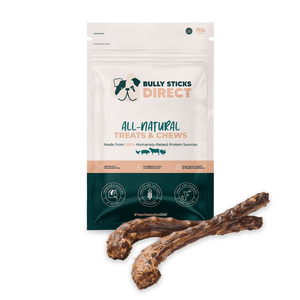
The goose neck is the most structurally complete single-ingredient chew in BSD's novel protein range. A single dried goose neck contains three distinct tissue types that deliver three distinct benefits: the neck muscle (skeletal muscle at ~70–80% crude protein, the novel protein benefit for allergy-managed dogs), the vertebral bones (soft dried bird bone — genuinely chewable and digestible, providing calcium, phosphorus, and trace minerals in bioavailable whole-food form), and the surrounding cartilage and connective tissue (naturally rich in glucosamine and chondroitin sulfate, the compounds that support joint cartilage integrity). For dogs whose owners want to address novel protein allergen avoidance, joint support, dental benefits, and extended-session enrichment simultaneously, the goose neck delivers all four in one product with one ingredient.
For dogs with beef allergies that have been relying on bully sticks for their chewing enrichment, dental care, and behavioral management, the goose neck is the most functionally complete replacement available. BSD's 6" Select Bully Sticks provide ~80–100 calories, 30–55 minute sessions, mechanical dental cleaning, and behavioral endorphin/cortisol benefits from sustained chewing. The goose neck provides comparable session duration, similar multi-angle dental contact as the dog works through different tissue types, the same behavioral benefits from sustained chewing, and the additional joint support benefit from cartilage compounds — all in a 100% goose format that contains no beef protein whatsoever. The transition from beef bully sticks to goose necks for a beef-allergic dog is the cleanest functional swap in the entire BSD catalog.
The soft bone question is one of the most misunderstood issues in dog chew selection. The "never give dogs bones" warning refers specifically to cooked hard mammalian bones that splinter into sharp fragments. Dried bird neck bones are categorically different: they are small, porous, and brittle in a way that allows medium-to-large dogs to crush them completely rather than generating large, sharp fragments. Veterinary raw feeding guidelines specifically recommend poultry necks as appropriate edible bone formats — the bone-to-soft-tissue ratio and vertebral diameter of a bird neck are appropriate for safe consumption by correctly sized dogs. The dried version maintains this safety profile because the bone dries brittle-porous rather than dense-hard.
The bully stick replacement calculation for beef-allergic dogs: A dog that has been given 6" Select Bully Sticks 3 times per week as their primary chew enrichment loses that routine when a beef allergy is diagnosed. This is a genuine wellbeing problem: the behavioral benefits of regular chewing — sustained beta-endorphin release, cortisol suppression, focused calm behavior, dental maintenance — don't disappear because the protein source needs to change. The goose neck preserves those benefits entirely. The chewing posture (paw-pinning the neck and working methodically through it), the dental contact (bone abrasion plus tissue abrasion across multiple tooth surfaces), the session duration (20–45 minutes depending on dog size and chewing intensity), and the behavioral relaxation from sustained rhythmic chewing are all present in the goose neck. What changes is only the protein. For the Lab or Golden whose owner has just received a diagnosis of beef allergy from their veterinarian, stocking BSD's goose necks on the same day as the consultation means the chewing routine continues without interruption — the protein just changed.
Soft Bone Safety — The Science Behind Why Dried Bird Necks Are Safe
Understanding why dried bird bones are safe for appropriately sized dogs requires an understanding of bone physiology. Mammalian long bones (beef femur, marrow bones, T-bones from cattle or pigs) are composed of dense cortical bone with a Vickers hardness of approximately 40–50, harder than dog enamel. When a dog bites hard on dense cortical mammalian bone, two things can happen: the tooth fractures (slab fracture of the carnassial is the documented veterinary dental emergency from hard bone chewing), or the bone generates large, sharp fragments that pose laceration or obstruction risk. This is the bone hazard that veterinary warnings address.
Bird vertebrae are anatomically different. The cervical vertebrae of a goose are small (typically 1–2 cm in diameter), have thinner cortices, and a more porous trabecular structure than mammalian long bones. When a medium-to-large dog applies jaw pressure to a dried goose neck vertebra, the bone crushes rather than fragmenting into sharp shards — the result is small calcified pieces that the dog ingests as whole-food calcium and phosphorus, not as sharp bone splinters. This is why veterinary raw feeding guidelines (including those from the British Veterinary Association and Veterinary Hospitals Association) specifically include raw meaty poultry necks as appropriate "recreational bones" for dogs. The dried version maintains this safety profile.
Size matching is the essential safety variable. The jaw-to-neck-bone-diameter ratio must allow proper crushing. For dogs 25 lbs and above: whole goose necks are appropriate. For dogs 15–25 lbs: break the neck in half before giving. For dogs under 15 lbs: break into thirds and supervise closely. Never leave any dog unsupervised with any chew format, including goose necks.
Joint Support — Natural Glucosamine and Chondroitin from Goose Cartilage
Glucosamine and chondroitin sulfate are the primary active compounds in canine joint health supplements. Glucosamine is an aminosaccharide that serves as the biosynthetic precursor to glycosaminoglycans — the structural molecules that give joint cartilage its compressive strength and elasticity. Chondroitin sulfate is a glycosaminoglycan that contributes to cartilage water retention and resistance to degradation. In the goose neck, both compounds are naturally present in the cartilage rings surrounding the trachea, the articular cartilage at each vertebral facet joint, and the connective tissue throughout the neck structure. This is whole-food delivery — the compounds are present in their natural extracellular matrix context alongside collagen, hyaluronic acid, and supporting structural proteins.
For the high-risk breeds most in need of goose's novel protein benefit — Labrador Retrievers and Golden Retrievers — joint health is also a significant breed concern. Labs have one of the highest rates of hip and elbow dysplasia among breeds. Goldens have elevated rates of joint problems throughout their lifespan. The combination of novel protein allergen management and natural joint support in a single treat format is specifically relevant for these breeds: the same goose neck that replaces their beef bully stick for allergy management also contributes to their joint health protocol through whole-food glucosamine and chondroitin. No additional supplement is required to capture both benefits.
Dental Benefit of Goose Neck Chewing Sessions
Bully sticks reduce oral bacteria by 60.2% per the 2014 Rutgers University study (Gallagher) — this data was established specifically with beef pizzle. Goose necks produce dental benefits through a different but meaningful mechanism: as the dog works through the multi-tissue neck structure, different tooth surfaces contact different materials. The muscle tissue provides fibrous, abrasive contact similar to that of bully sticks. The cartilage provides a firmer but still yielding surface that contacts the premolars and molars during compression. The bone provides the hardest contact surface — though still crushable rather than fracture-causing — and the most aggressive mechanical plaque disruption. The combination of tissue types in a single chewing session means more of the dental arc is exposed to abrasive contact than in single-tissue formats. For dogs replacing bully sticks due to a beef allergy, goose necks maintain meaningful dental contact during chewing rotation without requiring a separate dental-specific product.
Session Duration by Dog Size and Chewer Type
| Dog Weight | Chewer Type | Est. Session | Notes |
|---|---|---|---|
| 25–40 lbs | Moderate | 30–50 min | Ideal fit — whole neck, supervised |
| 40–60 lbs | Moderate | 25–40 min | Good fit; two necks for a longer session |
| 60–80 lbs | Moderate | 20–35 min | Appropriate; step to 2 necks for more |
| 80–100+ lbs | Moderate | 15–25 min | Use as enrichment; 2 necks = fuller session |
| 25–60 lbs | Heavy | 15–25 min | Use as a variety treat; Goose Strips for more |
| 15–25 lbs | Moderate | 25–40 min | Give half neck; supervise closely |
How to Use — Introduction, Frequency & Storage
First introduction: Give a 15-minute supervised first session. Confirm the dog is chewing — crushing and advancing — rather than attempting to swallow large intact sections. Most dogs approach naturally; the few that attempt to gulp should have the neck removed and replaced with a smaller strip format until proper chewing behavior is established through positive reinforcement of chewing posture.
Frequency: 2–4 times per week. Goose necks are nutritionally complete in a way most treats are not — they provide bone mineral alongside protein and cartilage compounds. Factor them into daily calorie management. For dogs replacing bully sticks due to a beef allergy, the same 2–3 times-per-week frequency of their bully stick rotation is appropriate as a direct substitution.
For allergy elimination protocols: Confirm with your veterinarian that goose is appropriate for your dog's allergen profile before giving. For beef-free and grain-free protocols, goose necks are appropriate. For chicken-free or pan-poultry protocols: consult your veterinarian due to avian protein cross-reactivity. Goose necks must be the only chew during an active elimination trial — no bully sticks, no pig ears, no other chew formats containing excluded proteins.
Storage: Keep in original packaging or a sealed container—cool, dry location. After opening the 12-pack, store the individual necks sealed; consume within 3–4 months. Do not allow moisture contact — dried bone treats are more susceptible to mold with humidity exposure than muscle-only treats.
Frequently Asked Questions
Yes — and this is one of the primary use cases for goose necks at BSD. Labs with confirmed beef allergy that have been receiving bully sticks 2–3 times per week for chewing enrichment, dental care, and behavioral management need a non-beef alternative that maintains the same routine. Goose necks provide extended session duration (25–40 minutes for most Labs), dental contact through multi-tissue abrasion, behavioral endorphin/cortisol benefits from sustained rhythmic chewing, and natural joint support from cartilage glucosamine that is specifically valuable for a breed with high hip and elbow dysplasia rates. The protein is 100% goose, with no beef content, making it appropriate for beef-allergic Labs. Confirm with your veterinarian that your Lab's allergy protocol is specifically beef-free, not pan-poultry-free. That goose is confirmed appropriate, given no poultry cross-reactivity is suspected.
Yes — the goose neck specifically addresses both simultaneously. German Shepherds with food allergies commonly react to beef and chicken — two of the top three canine allergens. Goose necks provide a 100% goose novel protein with no beef or grain content, appropriate for Shepherds on beef-free protocols (confirm poultry cross-reactivity with your vet for chicken-allergic Shepherds). The natural glucosamine and chondroitin in the neck cartilage support the joint cartilage that German Shepherds are particularly prone to stressing due to their deep-chested, heavy-boned conformation and high activity levels. German Shepherds also have one of the highest rates of degenerative myelopathy and hip dysplasia of any breed — regular whole-food cartilage nutrition is appropriate preventive support alongside veterinary joint management. The goose neck provides both benefits from a single 100% goose product without requiring a separate joint supplement for the chewing routine.
Not for appropriately-sized dogs given whole dried goose necks. Dried bird vertebrae are small, porous, and brittle — they crush under jaw pressure rather than generating large, sharp fragments, unlike dense cortical mammalian long bones. This is why veterinary raw feeding guidelines specifically include poultry necks as appropriate edible bone formats. Always size-match: give whole necks to dogs 25+ lbs, half necks to dogs 15–25 lbs, and thirds for smaller dogs with close supervision. Supervise all first sessions with any new chew format. The bone hazards that veterinary warnings address — cooked hard mammalian bones that splinter, dense weight-bearing bones harder than tooth enamel — are not present in dried bird necks. The risk level of a goose neck is significantly lower than rawhide, which is not digestible, and significantly lower than antler or hard marrow bones, which can fracture teeth.
Functionally similar — both are poultry necks with soft bone, cartilage, and muscle. The critical difference for allergy-managed dogs: chicken necks contain chicken protein, which is the #2–3 canine food allergen and inappropriate for dogs on chicken-free elimination diets. Goose necks contain goose protein — genuinely novel for most dogs, with no prior sensitization history and no cross-reactivity with beef or lamb allergens. For healthy dogs without food allergies who enjoy the format, chicken necks and goose necks are comparable. For dogs on allergy management protocols where chicken is excluded or suspected, goose necks are the appropriate format, and chicken necks cannot be used.
Instructions
Feeding Instructions :
Please monitor your dog while feeding these gourmet natural treats, they are fully digestible however, please always provide a fresh supply of drinking water for your pup.
Recommendations:
Store your bully sticks in the original zip lock bag under cool conditions