




Description
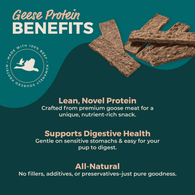
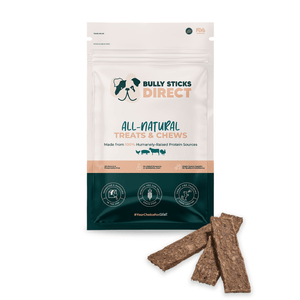
Goose Strips are dried goose muscle meat in strip format — the lean muscle chew in BSD's goose range, positioned between the organ-meat richness of goose hearts and the whole-structure complexity of goose necks. One ingredient: goose. The strips are long enough to function as a 15–25-minute chew session for small-to-medium dogs, breakable into pieces at any point for use as training rewards, and appropriate for all dog sizes without size-matching requirements. The 25-pack quantity provides enough volume for 4–8 weeks of regular rotation use, depending on frequency — making this the practical everyday format for owners who want a novel protein strip in meaningful quantities without running out after a few sessions.
The lean muscle meat profile is the key nutritional distinction of goose strips versus goose hearts. Cardiac muscle (hearts) is richer, higher in fat from the lipid-dense cardiac tissue, higher in taurine, and more aromatic due to the higher concentration of fat-soluble flavor compounds in organ tissue. Skeletal muscle (strips) is leaner, lower in fat, higher in pure myofibrillar protein, and slightly less aromatic but still meaningfully more motivating than grain-based or plant-based training treats. For dogs on low-fat dietary protocols — pancreatitis management, hyperlipidemia (particularly relevant for Miniature Schnauzers), weight management, or any condition where fat restriction is medically indicated — goose muscle strips provide novel protein treat value without the fat content of organ meat formats or higher-fat conventional treats like pig ears.
The iron content of goose muscle deserves specific attention. Waterfowl muscle tissue contains significantly more myoglobin than domestic poultry like chicken — myoglobin is the oxygen-storage protein in muscle that gives dark meat its color and high iron concentration. Geese that migrate thousands of miles annually have oxygen-demand requirements orders of magnitude higher than domestic chickens. This is reflected in the myoglobin concentration of their muscle tissue, which in turn affects the iron content and the darker, richer flavor of goose meat. For dogs where dietary iron is a consideration — whether from mild anemia, recovery from illness, or simply optimizing red blood cell function in active working dogs — goose muscle strips provide genuinely higher iron per gram than chicken-based treats.
The preventive rotation case — why you should add goose strips before your dog needs them: The BMC Veterinary Research systematic review of 297 food-allergic dogs found beef (34%), dairy (17%), and chicken (15%) account for the majority of confirmed canine food allergen cases. These are the proteins in most daily dog treats. The mechanism is cumulative exposure — proteins received every single day for years are the ones that become allergens. The appropriate response to this data for owners of dogs without current food allergies is preventive rotation: systematically varying the protein source in treats so no single protein accumulates the repetitive daily exposure that sensitization requires. Goose strips are the novel protein rotation option — give them one week per month in place of conventional bully sticks or chicken treats. No single protein receives more than 25% of monthly treatment exposure. No single protein builds the cumulative sensitization load. This is infinitely easier to manage before symptoms appear than after a veterinarian diagnoses a food allergy and eliminates your dog's entire existing treat supply from the protocol.
Novel Protein Rotation — A Practical Monthly Protocol
Protein rotation at the treatment level is the practical implementation of the preventive strategy. Here is a specific monthly protocol using BSD's range that limits cumulative exposure to any single protein while maintaining the treat formats dogs engage with:
| Week | Primary Treat | Protein | Cumulative Monthly Exposure |
|---|---|---|---|
| Week 1 | 6" Select Bully Sticks (Odor-Free) | Beef | 25% |
| Week 2 | Goose Strips or Goose Cubes | Goose | 25% |
| Week 3 | Turkey Tendons | Turkey | 25% |
| Week 4 | Pork Bully Stick Springs | Pork | 25% |
Each protein receives one week of exposure rather than daily cumulative exposure. No single protein builds the repetitive sensitization load that allergies require. The rotation also maintains novelty engagement — each new week brings a different scent profile and texture that dogs respond to with the elevated engagement that novel stimuli always produce. The protocol is simple enough to follow indefinitely; the only required behavior change is to buy treats in smaller quantities across four different protein categories rather than a single large quantity from a single category.
Low-Fat Applications — When Goose Strips Are the Medically Correct Choice
Several common canine medical conditions require ongoing low-fat dietary management, and the treat category is often overlooked in the fat-restriction calculation:
Pancreatitis: Dogs with a history of pancreatitis or active pancreatitis management require strict low-fat diets — high-fat treats can trigger pancreatic inflammation even in dogs whose food intake is appropriately restricted. Most natural single-ingredient treats (pig ears at 25–35% fat, bully sticks at ~5–8% fat, organ meat at varying fat content) need individual evaluation. Goose muscle strips — lean dried skeletal muscle — are among the lowest-fat natural protein treats available, making them appropriate for pancreatitis-managed dogs whose treat protocol must reflect the same fat restriction as their food.
Hyperlipidemia (elevated blood triglycerides): Miniature Schnauzers are specifically predisposed to this condition and are frequently managed on low-fat diets by their veterinarians. Both the food and treat components of their diet need to reflect this restriction. Goose strips, as lean muscle meat, provide an appropriate treat option for Schnauzers on hyperlipidemia protocols — they can receive regular training rewards and daily treats without the fat contribution that would compromise the dietary management.
Weight management: For overweight dogs where calorie restriction is the primary goal, goose strips' lean profile means more treat volume per calorie than fat-rich treats — the same caloric budget buys more reward events with goose strips than with pig ears or organ meat. For dogs on structured weight loss programs, this matters for maintaining motivation and adherence to training through the weight loss period.
Breed-Specific Applications — Who Specifically Benefits from Goose Strips
Labrador Retrievers (beef allergy + weight management): Labs simultaneously lead the breed rankings for food allergies and for obesity — they have a documented genetic mutation in the POMC gene that affects appetite regulation. A beef-allergic, overweight Lab needs treats that are novel protein (no beef) AND low-fat (not contributing excess calories). Goose strips solve both: a novel protein for the allergy protocol and lean muscle for the calorie management protocol. This specific combination is difficult to find in any commercial treat format.
Miniature Schnauzers (hyperlipidemia + allergy management): Schnauzers are predisposed to both hyperlipidemia and food allergies. Their treats must be low-fat (for triglyceride management) and ideally novel protein (for allergy prevention or management). Goose strips deliver both. The 25-pack quantity at a reasonable price point makes this practical for daily use in a breed where the treat standard cannot be a single high-fat pig ear per week.
West Highland White Terriers (food-responsive dermatitis): Westies are famous for skin problems, and food-responsive dermatitis to beef and chicken is one of the most common presentations. Westies on beef-free protocols typically need daily training treats for behavioral management — they are spirited, independent dogs where reliable food motivation is important for recall training and general compliance. Goose strips at lean muscle palatability provide daily training use without the beef protein that may be contributing to their dermatitis.
Boxers (cardiac + allergy + weight): Boxers have an elevated risk of cardiac disease, common food allergy presentations, and a tendency toward weight gain. Goose strips — lean novel protein with no beef, reasonable fat content, and no cardiac contraindications — fit naturally into a Boxer's optimal treat profile. The taurine consideration that makes goose hearts relevant for Goldens and Cockers applies to Boxers as well. However, strips are lean muscle (lower taurine than hearts), and Boxers wanting cardiac nutritional support would benefit from rotating goose strips with goose hearts rather than using strips exclusively.
Session Duration and Use by Dog Size
| Dog Weight | Use Format | Est. Duration | Notes |
|---|---|---|---|
| Under 10 lbs | Quarter strip | 8–15 min | Appropriate compact session or training reward |
| 10–25 lbs | Half strip | 12–22 min | Good session chew; whole strip for longer |
| 25–50 lbs | Whole strip | 15–28 min | Primary session format for this range |
| 50–80 lbs | 1–2 whole strips | 12–22 min | Good training reward; necks for sessions |
| Over 80 lbs | 2+ strips or use as training rewards | Varies | Strips are best as training treats in large sizes |
Nutrition Specs
Nutrition
| Crude Protein | ~70–80% |
| Fat content | Low — lean skeletal muscle |
| Iron relative to chicken | Higher (higher myoglobin) |
| Ingredients | Goose Only |
| Beef-free | Yes |
| Grain-free | Yes |
Sourcing
| Protein source | Goose (100%) |
| Additives | None |
| Preservatives | None |
| Secondary proteins | None |
| Quantity | 25 strips per pack |
Frequently Asked Questions
Yes — goose strips are one of the most appropriate natural single-ingredient treats for Miniature Schnauzers with hyperlipidemia. The condition requires low-fat diet management in both food and treats. Goose muscle strips are lean skeletal muscle with low fat content — suitable for Schnauzers on fat-restricted protocols. They are single-ingredient with no secondary fat sources, additives, or processing oils. Schnauzers also have elevated rates of food allergies, and goose as a novel protein is appropriate for Schnauzers whose allergy profile does not include poultry (confirm with your veterinarian if a poultry allergy has been suspected). For Schnauzers who need both low-fat AND novel protein treats simultaneously, goose strips are one of the very few formats that deliver both.
Both are 100% goose, single-ingredient, appropriate for allergy management and rotation protocols. The difference is tissue type and the nutritional and palatability consequences of that difference. Goose strips are lean skeletal muscle — lower fat, cleaner handling (less residue in training pouches), appropriate for fat-restricted dogs, and with a slightly less aromatic scent profile than organ meat. Goose hearts are cardiac muscle — higher fat, richer in taurine and B-vitamins, more aromatic (organ meat scent compounds are more volatile and more detectable at lower concentrations than skeletal muscle), and somewhat higher in palatability for most dogs. For daily rotation use where volume and low-fat profile matter: strips. For high-value training rewards and jackpot markers where maximum palatability is the priority: hearts. Many owners use strips as their primary rotation treat and hearts as the high-value reward during specific training challenges.
Yes — strips work well in most enrichment formats. For Kong stuffing: break strips into 1–2 cm pieces and pack tightly. For snuffle mats: tear strips into smaller pieces and weave them into the mat fibers. For lick mats: strips need to be softened slightly with water for 2–3 minutes before pressing into the mat surface for adhesion. For scatter feeding: tear or cut into irregular pieces, then scatter them on grass or a snuffle mat. For dogs on allergy elimination protocols who are also receiving enrichment feeding as part of anxiety management, goose strips as the enrichment food source maintains protocol integrity while delivering the behavioral benefits of food-seeking enrichment.
Myoglobin — the oxygen-storage protein in muscle tissue — determines iron content per gram of meat. Myoglobin concentration in muscle is proportional to the oxygen demands that the muscle type must meet. Domestic chickens are bred for sedentary production environments and have low myoglobin content in breast muscle (white meat). Geese are migratory waterfowl whose pectoral muscles must sustain aerobic flight over thousands of miles — their muscle tissue has dramatically higher myoglobin concentrations to meet that oxygen demand. This is why goose meat is dark, why it has a richer flavor than chicken, and why it contains more iron per gram. For dogs where iron status is a consideration — active working dogs, dogs recovering from mild anemia, or simply owners optimizing nutritional density in their dog's treat protocol — goose muscle strips deliver meaningfully more dietary iron than equivalent-weight chicken treats.
Instructions
Feeding Instructions :
Please monitor your dog while feeding these gourmet natural treats, they are fully digestible however, please always provide a fresh supply of drinking water for your pup.
Recommendations:
Store your bully sticks in the original zip lock bag under cool conditions