



Description
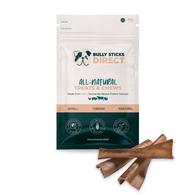
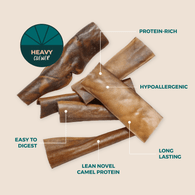
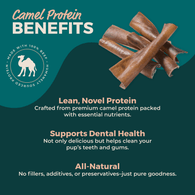
BSD's Camel Skin is dried outer camel hide — one ingredient, naturally processed, 75.05% crude protein, 8.96% crude fat. That protein number is not a marketing figure. It is the analyzed crude protein content of this specific product, and it is higher than the comparable specification for most beef collagen sticks (typically 65 to 75%), despite being camel rather than the conventional option. The dense, fibrous collagen matrix of camel skin creates a long-session chew experience — the interwoven type I and type III collagen fibers require sustained jaw work to advance through, producing 20 to 50-minute sessions, depending on dog size and chewing intensity. This is the functional experience of a beef collagen stick or thick bully stick: extended engagement, sustained dental abrasion across the full session, behavioral endorphin release from rhythmic chewing, and a meaningful collagen peptide contribution from the skin matrix — delivered from a protein that approximately 90 million dogs in America have essentially never encountered.
That last point is the entire clinical argument. There are roughly 9 million food-allergic dogs in the United States — 10% of the 90 million pet dog population, according to AVMA 2025 data. The vast majority react to beef (34% of allergic dogs per BMC Veterinary Research), chicken (15%), dairy (17%), wheat (13%), or lamb (5%). Every single one of those proteins appears in mainstream commercial treats. BSD's camel skin exists in the gap the treat market has created: a single-ingredient, 75.05% protein, naturally dried hide chew from the one animal whose protein has essentially zero commercial exposure history in North American pet food. Not a reformulated mainstream protein. Not a beef product with a different cut. Camel — an entirely distinct biological family (Camelidae) with no established cross-reactive structures with any common canine food allergen.
The format matters equally. The allergy-managed dog population does not just need training treats — they need the long-session chew enrichment that conventional products have been providing. Sustained chewing suppresses cortisol and releases beta-endorphins. A 2020 PLOS ONE study found significantly lower cortisol levels in dogs given appropriate chewing opportunities compared with control periods. Dogs with chronic food allergies typically have elevated baseline cortisol due to sustained pruritus — chronic itching is uncomfortable and stressful. Removing conventional chews from their protocol without replacing them with an appropriate equivalent degrades both behavioral welfare and protocol compliance. Camel skin restores the long-session chew experience in a protein appropriate for dogs with one, two, three, or five confirmed food allergies.
75.05% crude protein — what this number means and why it matters: Crude protein at 75.05% means that 75 of every 100 grams of camel skin by dry weight is protein. The protein is almost entirely collagen — type I and type III collagen fibers that form the structural matrix of the skin. When a dog chews camel skin, it is consuming collagen peptides processed through normal enzymatic hydrolysis in the digestive tract. These collagen peptides support joint health, maintain connective tissue, support coat and skin health, and support gut lining integrity. This is the same nutritional mechanism that makes beef collagen sticks valuable for dogs. Camel delivers it at a higher protein concentration than most beef collagen products and at a fat content (8.96%) that is leaner than most hide chews from species with higher subcutaneous fat distribution. High protein, lean fat, and zero allergen history in a single product is not available from any other hide chew format on the market.
The 9 Million Dog Treatment Gap — Why This Product Exists
Nine million dogs in the United States have food allergies. The veterinary protocol for managing those allergies — an 8 to 12 week elimination diet trial using a novel protein the dog has never consumed, with zero exceptions, including treats, flavored medications, or flavored supplements — is the gold-standard diagnostic method and the ongoing management framework. Every veterinary dermatologist prescribing this protocol faces the same problem: the treatment market does not support it. Novel protein kibble is widely available. Novel protein chews are not. The elimination diet protocol fails at the treat step more often than any other step because owners cannot find appropriate chew products that meet three requirements simultaneously: single-ingredient, genuinely novel protein, and a long-session format that maintains behavioral enrichment during a potentially disruptive dietary transition.
BSD's camel skin meets all three. It is a single ingredient — no secondary proteins, no "natural flavors" that can legally encompass any protein source, no additives that introduce allergen variables. It is genuinely novel — camel has no commercial presence in mainstream North American pet food and no cross-reactive structures with any common allergen. And it is a long-session format — the collagen-dense hide provides 20 to 50 minutes of sustained chewing engagement comparable to the conventional chews it replaces.
Camel Skin vs. Beef Collagen Sticks — The Direct Comparison
| Variable | Camel Skin (BSD) | Beef Collagen Sticks | Advantage |
|---|---|---|---|
| Protein source | Camel (Camelidae) | Beef (Bovidae) | Camel — zero allergen history |
| Crude Protein | 75.05% | ~65–75% | Camel — higher protein |
| Crude Fat | 8.96% | ~10–18% | Camel — leaner |
| Beef-allergic dogs | Appropriate | Not appropriate | Camel — only option |
| Chemical processing | None | Varies by brand | Camel — cleaner |
| Novel protein status | Maximum — zero allergen history | Zero — #1 allergen species | Camel — unmatched |
| Session duration | 20–50 min (size-dependent) | 20–50 min (size-dependent) | Comparable |
| Dental abrasion | Yes — sustained fibrous contact | Yes — sustained fibrous contact | Comparable |
Why Camel Skin Is Not Rawhide
Rawhide is manufactured using industrial chemical processing — lye (sodium hydroxide) baths to strip hair, hydrogen peroxide bleaching to achieve white color, and sometimes formaldehyde-based preservatives to extend shelf life. These chemicals are not fully removed from the finished product. Rawhide digestibility is poor — swallowed chunks do not break down reliably in stomach acid, and the AKC and VCA Animal Hospitals both cite rawhide as one of the chew types most commonly involved in digestive emergencies, including obstructions. Rawhide is also always bovine — it contains beef protein, making it entirely inappropriate for dogs with beef allergies.
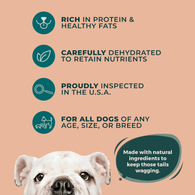
BSD's camel skin undergoes no chemical processing. The hide is cleaned and dried — the same fundamentally simple process that produces any natural meat chew. The natural collagen structure is preserved and is digestible through enzymatic hydrolysis—no chemical residue. No bleaching. One ingredient: camel. The product looks different from rawhide: darker in color (natural camel hide, not bleached white), slightly irregular in shape (natural hide, not molded). These are the visual markers of genuine single-ingredient natural processing.
Session Duration by Dog Size
| Dog Weight | Chewer Type | Est. Session | Notes |
|---|---|---|---|
| Under 15 lbs | Light–Moderate | 35–55 min | Excellent long session for small breeds |
| 15–30 lbs | Moderate | 28–45 min | Good fit; excellent extended session |
| 30–55 lbs | Moderate | 22–38 min | Primary session format: 2 pieces for more |
| 55–80 lbs | Moderate | 18–30 min | Good rotation session; 2 pieces for full replacement |
| Over 80 lbs | Moderate | 15–25 min | Use as enrichment rotation; 2–3 pieces for a full session |
| Any | Heavy/Power | 10–18 min | Novel protein enrichment item; best in rotation variety |
Breed-Specific Applications
Labrador Retrievers with beef allergy and weight-management needs face a specific double constraint, with camel skin's numbers clinically optimal. Labs are the most popular US breed, have the highest risk of food allergies, and carry a POMC gene variant that promotes obesity. A beef-allergic Lab that previously received thick bully sticks can transition to camel skin with no disruption to the chewing routine, improved protein per session, and a lean fat contribution appropriate for Labs on calorie-restricted management alongside allergy management.
Golden Retrievers with multiple sensitivities — Goldens that have developed beef sensitivity, then tried duck and venison, and developed secondary sensitivities — are the specific clinical progression where camel's maximum novelty becomes necessary. For these Goldens, every protein in the conventional novel protein rotation has become an allergen. Camel is the protein with zero prior exposure and no cross-reactive structures with any documented allergen,n regardless of how extensive the existing allergen list has become.
German Shepherds on complex elimination protocols with multiple confirmed allergens benefit from camel's absolute novelty: regardless of the specific allergen list — beef, chicken, lamb, venison, duck, rabbit, any combination — camel protein has no cross-reactive relationship with any of them.
Miniature Schnauzers with hyperlipidemia and food sensitivity need both low-fat treats and novel protein treats simultaneously. Camel skin at 8.96% fat is among the leanest natural hide chews available; camel as a protein is genuinely novel for virtually all Schnauzers on standard commercial diets. One product, both constraints addressed simultaneously. Confirm your Schnauzer's specific fat limit with your veterinarian before incorporating.
Introduction, Protocols, and Storage
First introduction: Give one piece in a 15-minute supervised session. Monitor 24 to 48 hours for any GI response. For dogs without active allergy management: proceed to normal use after a successful first session. For dogs in active elimination diet trials: confirm with your veterinarian that camel is appropriate for the protocol before the first piece.
During elimination diet trials, Camel skin must be the only chew provided. No other treats, no flavored medications, no flavored joint supplements during the 8 to 12 week trial period. One exposure to an excluded protein invalidates the protocol entirely.
Frequency for regular rotation: 2 to 4 sessions per week. Factor each session into daily calorie management — camel skin is calorie-dense due to high protein content.
Storage: Seal immediately after every use. Cool, dry location away from direct sunlight and humidity. Opened 25-pack: consume within 3 to 4 months. Keep away from moisture — naturally dried hide, without chemical preservatives, is susceptible to mold in sustained humidity.
Frequently Asked Questions
This is the most common scenario BSD hears from customers, and camel skin was specifically designed for it. Labrador Retrievers with beef allergy who have been receiving bully sticks daily have two problems: they can no longer have beef, and they need a functional replacement that provides the same long-session chewing enrichment that bully sticks deliver. Camel skin addresses both. It is 100% camel — no beef, no beef-derived ingredients — so it is appropriate for your Lab's allergy protocol. And it is a collagen-dense hide chew that provides 20 to 38 minute sessions for a 40 to 80 lb dog, comparable to the bully stick sessions your Lab was having before. Transition from bully sticks to camel skin for the chewing rotation, and discuss with your veterinarian what other dietary changes the beef allergy diagnosis requires. If your Lab was also receiving beef-based kibble, that needs to change simultaneously — the treat change alone will not resolve allergy symptoms if the primary food is still beef-based. Actually, to work, the elimination diet protocol requires changing both food and treats to appropriately novel proteins.
Yes — this is the analyzed specification for BSD's camel skin product. Skin tissue is composed primarily of collagen types I and III, which form dense, interwoven bundles, giving the skin its structural integrity and elasticity. When the skin is dried, the remaining dry matter is overwhelmingly protein (collagen), with the remainder being fat and ash (minerals). Because camel skin has relatively low fat content (the camel's fat is stored in humps rather than distributed subcutaneously), the protein concentration in the dried product is particularly high. 75.05% crude protein means that, by dry weight, three-quarters of what your dog is eating is protein, almost all of it collagen. For an allergy-managed dog that needs a high-protein chew with zero allergen exposure, this specification is meaningful—it is also higher than most comparable beef products, which typically run 65 to 75% crude protein in their analyzed specifications.
Yes — camel skin is palatable for the vast majority of dogs, though the scent and flavor profile differ from beef and chicken products. Camel meat has a mild, slightly gamey flavor profile with a scent that dogs consistently respond to with normal to high interest. The novelty of the protein scent actually works in your favor — dogs that have become habituated to the familiar scent of beef or chicken treats often show elevated engagement with novel protein scents because novelty itself is a motivating stimulus. Owners introducing camel skin to their dogs typically report confident acceptance in the first session. For dogs that are particularly suspicious of unfamiliar foods — common in dogs with long histories of a single food source — warm the piece briefly in your hand before giving the first session. Body temperature enhances the volatile scent compounds that signal palatability to dogs and can bridge the initial investigation phase more quickly.
The combination of beef allergy and pancreatitis imposes a tight constraint: treats must be novel protein AND low-fat. Camel skin's 8.96% crude fat is among the leanest specifications for any natural hide chew available. For comparison, pig ears typically run 25 to 35% fat; beef bully sticks run 5 to 8%; beef collagen sticks run 10 to 18%. At 8.96%, camel skin sits in a lean range appropriate for many pancreatitis management protocols. That said, pancreatitis management is highly individual — some dogs are managed with very strict fat limits, while others are managed with less restrictive measures. Confirm the specific fat limit your veterinarian has established for your dog's pancreatitis management, and discuss whether one camel skin chew session at the appropriate size for your dog falls within that limit. Do not introduce any new treat during an active pancreatitis flare — only during stable managed periods with your veterinarian's guidance on fat tolerance.
Both camel skin and goat skin are naturally dried single-ingredient hide chews in novel proteins appropriate for beef-allergic dogs. The key distinction is biological family and depth of novelty. Goat is a Bovidae — same order as cattle, though with distinct protein antigens that do not cross-react with bovine allergens. Camel is a member of the family Camelidae — a completely separate biological family with no taxonomic relationship to any common allergen source. For dogs with multiple allergen sensitivities, including beef, chicken, and potentially venison, camel is the stronger choice because it is the most biologically distant protein from all common allergens simultaneously. Goat is the appropriate starting choice for most beef-allergic dogs encountering novel protein hide chews for the first time — familiar red-meat flavor profile, appropriate novel protein status for dogs without extensive prior allergy history, and slightly lower price. Camel is the escalation when the dog has exhausted goat and multiple other novel proteins, or when the veterinarian recommends maximum biological novelty. Many allergy-managed dogs benefit from stocking both and rotating between them: goat skin one month, camel skin the next.
25 individual pieces. At 2 to 3 chew sessions per week — the typical rotation frequency for a dedicated long-session chew — a 25-pack provides approximately 8 to 12 weeks of use. For dogs receiving camel skin as their week-4 rotation chew in a monthly four-protein rotation at 2 sessions per week, a single 25-pack covers approximately 6 months of rotation sessions. For dogs in an active elimination diet trial using camel skin as their only chew at 3 to 4 sessions per week, a 25-pack covers approximately 6 to 8 weeks — the full length of a standard trial. The quantity was specifically selected to provide enough supply to cover a full elimination trial without mid-trial restocking, which can create compliance gaps if the owner runs out during the critical final weeks. Order a second pack before the first is finished to maintain a continuous supply during active trial periods.
Instructions
Feeding Instructions :
Please monitor your dog while feeding these gourmet natural treats, they are fully digestible however, please always provide a fresh supply of drinking water for your pup.
Recommendations:
Store your bully sticks in the original zip lock bag under cool conditions