


Description
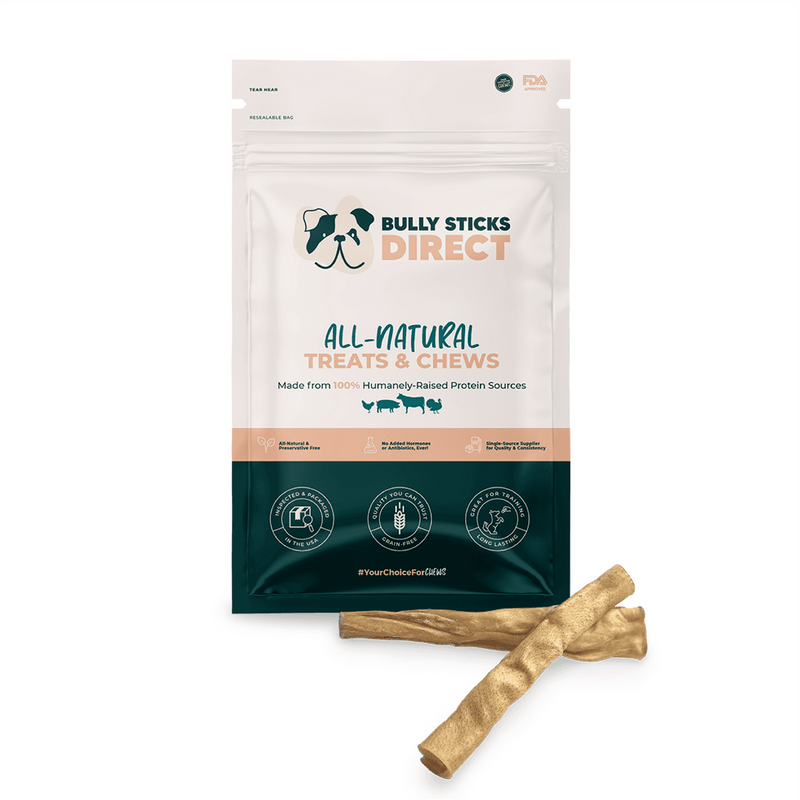
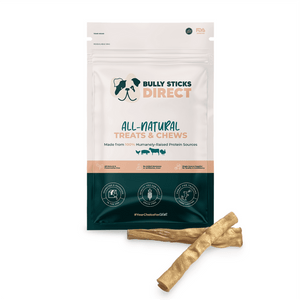
BSD's Goat Skin is dried outer goat hide — one ingredient, naturally processed without chemical treatments, with a lean fat profile and high protein content from the collagen-dense skin matrix. The format is a long-session collagen hide chew: the fibrous, interwoven type I and type III collagen fibers of goat skin require sustained jaw engagement to work through, producing 20 to 45-minute sessions depending on dog size and chewing intensity. This is functionally the same experience as a beef collagen stick or a medium-thickness bully stick — extended chewing enrichment, mechanical plaque and tartar reduction through sustained fibrous contact against tooth surfaces, the behavioral beta-endorphin release from rhythmic jaw engagement, and natural collagen peptide nutrition from the skin matrix, in a protein that contains no beef.
That last phrase is the entire purpose of this product. There are approximately 9 million food-allergic dogs in the United States — 10% of the 90 million dogs in American households, according to AVMA 2025 data. Of those, approximately 34% are allergic to beef per BMC Veterinary Research systematic review: roughly 3 million beef-allergic dogs, all of whom have lost access to the entire long-session collagen chew category the day their diagnosis arrived. Bully sticks: beef. Beef collagen sticks: beef corium. Beef cheek rolls: beef masseter. Rawhide: bovine. The treatment category that provided sustained chewing enrichment, dental care, and behavioral management for these dogs is entirely off the table. BSD's Goat Skin closes that gap: a long-session collagen hide chew with no beef protein, in a novel ruminant species with no established cross-reactivity with bovine allergens, validated by board-certified veterinary nutritionists who formulate therapeutic hypoallergenic goat diets for beef-allergic dogs worldwide.
Goat is also lean. Goat meat and goat skin have lower total fat and saturated fat than comparable beef products, with a higher omega-3-to-omega-6 ratio and greater digestibility for dogs with sensitive GI systems. These properties extend goat skin's appropriate use beyond allergen management: dogs on pancreatitis management protocols, Miniature Schnauzers with hereditary hyperlipidemia, seniors on calorie-controlled diets, and dogs where concurrent GI sensitivity accompanies the skin allergy presentation all benefit from the lean, digestible profile of goat skin.
The day a beef allergy is diagnosed — what it costs a dog's routine and why goat skin restores it: The immediate practical impact of a beef allergy diagnosis is larger than most owners anticipate. The food needs to change — owners expect this. What they do not expect is losing the entire chew routine simultaneously. A dog that has received one beef collagen stick per day and a beef bully stick three times per week for two years has a deeply ingrained behavioral routine centered on those products. Remove both at once, and you have a dog that is behaviorally disrupted, anxious without its usual enrichment outlet, and is redirecting its attention to destructive chewing. The cortisol-suppressing effect of sustained chewing — documented as producing measurably lower cortisol during and after extended chewing sessions in peer-reviewed research — stops. The dental care routine stops. The daily calming ritual stops. Goat skin is not merely a protein alternative. It is the behavioral and dental care restoration that happens on the same day as the allergy diagnosis, maintaining every element of the dog's chewing routine that the dog depends on, while providing a protein that the dog can actually have.
Why Goat Is Not Cross-Reactive with Beef — The Full Clinical Explanation
The concern about cross-reactivity between goat and beef is understandable — both are Bovidae family ruminants — and it deserves a thorough answer. Cross-reactivity occurs when IgE antibodies built against one protein's molecular shape can bind to a structurally similar protein from a different species. The classic documented example in dogs: beef and dairy cross-reactivity, because bovine serum albumin is found in both beef muscle and cow's milk. Dogs sensitized to beef frequently cross-react to dairy because they share the same serum albumin molecule from the same species.
Goat and beef do not share their serum albumins. Caprine serum albumin (from goat) has different amino acid sequences from bovine serum albumin (from cattle), producing different three-dimensional structures that do not bind to the same IgE antibodies. The proteins that trigger beef allergy are bovine-specific. At the molecular immunology level, beef and goat are distinct in their allergenicity. This is not theoretical: Zignature's Goat Formula is marketed and prescribed for beef-allergic dogs; board-certified veterinary nutritionists formulate Lyka's Hypoallergenic Pro Goat as a therapeutic hypoallergenic diet for food-allergic dogs. These products exist and succeed clinically because both science and clinical experience confirm that beef-allergic dogs tolerate goat without cross-reactive responses.
Goat Skin vs. Beef Collagen Sticks — Complete Comparison
| Variable | Goat Skin (BSD) | Beef Collagen Sticks | Significance |
|---|---|---|---|
| Protein source | Goat (Capra hircus) | Beef (Bos taurus) | No bovine allergen in goat skin |
| Beef-allergic dogs | Appropriate — no bovine protein | Not appropriate — beef corium | Goat skin is the only option |
| Fat profile | Lean — natural caprine profile | Moderate to high | Goat is better for fat-managed dogs |
| Chemical processing | None — naturally dried | Varies by brand | Goat cleaner for sensitive protocols |
| Novel protein status | High — no mainstream kibble distribution | Zero — beef is the #1 canine allergen species | Goat wins decisively on novelty |
| Session duration | 20–45 min size-dependent | 20–45 min size-dependent | Functionally comparable |
| Dental abrasion | Yes — fibrous collagen contact | Yes — fibrous corium contact | Comparable |
| Collagen peptides | Yes — type I and III goat collagen | Yes — type I bovine collagen | Both deliver joint-supporting collagen |
| GI digestibility | Highly noted for sensitive dogs | Good | Goat advantage for sensitive GI |
Goat Skin vs. Rawhide — Not the Same Product
| Variable | Goat Skin (BSD) | Beef Rawhide |
|---|---|---|
| Protein source | Goat only | Beef — #1 canine allergen |
| Chemical processing | None — naturally dried | Lye, H2O2 bleach, preservatives |
| Digestibility | Natural collagen — digestible | Chemically denatured — poor |
| GI emergency risk | Low | Higher — noted by AKC and VCA |
| Beef-allergic dogs | Appropriate | Never appropriate — always bovine |
| Appearance | Natural tan/brown, varied texture | Smooth, bleached white, uniform |
Session Duration by Dog Size
| Dog Weight | Chewer Type | Estimated Session | Notes |
|---|---|---|---|
| Under 15 lbs | Light–Moderate | 30–50 min | Ideal size match; excellent long session |
| 15–30 lbs | Moderate | 25–42 min | Good session chew; primary format for this range |
| 30–55 lbs | Moderate | 20–35 min | One piece per session; good primary format |
| 55–80 lbs | Moderate | 18–30 min | Good rotation session; two pieces for 40+ min |
| Over 80 lbs | Moderate | 15–25 min | Two to three pieces for a full session |
| Any | Heavy / Power | 10–18 min | Novel protein enrichment; supplement with primary chews |
Breed-Specific Deep Dive
Labrador Retrievers with beef allergy. Labs are the most popular breed in America and one of the highest-risk breeds for food allergy development due to genetically elevated IgE production. The Lab presenting with recurrent bilateral ear infections, paw licking, belly redness, and hot spots after years of daily bully sticks and collagen chews is the most common patient profile for goat skin. When the diagnosis arrives, the chew routine stops cold. Goat skin replaces it directly on day one: same session duration (20 to 30 minutes for a 50 to 80 lb Lab at moderate intensity), same collagen hide format, red-meat flavor profile that Labs accept without hesitation in the first session, zero beef protein.
Golden Retrievers with beef allergy and joint concerns. Goldens that need both allergen management and joint support benefit from goat skin's collagen peptide contribution, in addition to the allergy benefit. Type I and III collagen peptides support fibroblast activity, maintaining the integrity of cartilage, tendon, and ligament — relevant for the Golden with hip dysplasia or cruciate risk. Common food allergy symptoms in Goldens include diffuse body itching, recurrent ear infections with dark, waxy discharge, anal gland impaction, facial rubbing, and intermittent loose stools. The combination of skin and ear symptoms with anal gland involvement is characteristic of food-driven allergy in the breed.
German Shepherds with combined skin and GI food allergy. The Shepherd presenting with both weekly loose stools and recurring hot spots or pyoderma is the food-allergy dog that benefits most from the goat's digestibility advantage. Goat's lean profile and high digestibility address the GI component and the allergen-avoidance benefit simultaneously. Shepherds in the 55 to 90 lb range typically use two pieces per session for a 35 to 45 minute total.
Miniature Schnauzers with hyperlipidemia and food sensitivity. The combination of hereditary hypertriglyceridemia and food sensitivity in Miniature Schnauzers requires treats that are low-fat AND novel protein. Goat skin is the leanest red meat hide chew available, and goat is novel for Schnauzers without prior exposure. Single product, both constraints addressed. Confirm that the specific fat contribution is compatible with your Schnauzer's veterinary management protocol before introducing it.
French Bulldogs with food sensitivity. Frenchies frequently develop food sensitivities to beef and chicken and need chew formats that soften progressively during the session to accommodate their brachycephalic airway anatomy. Goat skin softens with saliva as the session progresses, enabling appropriate pacing. Always supervise French Bulldog chewing sessions completely.
Cocker Spaniels with food-responsive otitis externa. In a significant subset of Cocker Spaniels with chronic, recurring ear infections, the otitis is food-responsive — driven by dietary allergens that activate inflammatory mediators, altering the ear canal environment. For Cockers on beef-free elimination protocols, BSD's goat skin provides the single-ingredient, beef-free, approved chew that maintains behavioral enrichment without compromising protocol integrity.
Boxers with elevated allergy rates and cardiac context. Boxers have among the highest food allergy prevalence of any breed, along with DCM susceptibility. Single-ingredient transparency, lean fat, and novel protein status — all simultaneously relevant to Boxer health management — are present in goat skin.
The Weekly Novel Protein Protocol for Beef-Allergic Dogs
A practical weekly schedule using BSD's novel protein products for a beef-allergic dog in the ongoing management phase:
| Day | BSD Product | Protein | Function |
|---|---|---|---|
| Monday | Goat Skin — 1 piece | Goat | Long-session enrichment, dental, collagen, and cortisol management |
| Tuesday | Goose Hearts — 5–8 pieces | Goose | Training rewards, novel avian protein, taurine-rich muscle |
| Wednesday | Turkey Tendons — 1 piece | Turkey | Mid-week long-session chew, tendon enrichment |
| Thursday | Goose Cubes — 8–12 pieces | Goose | Recall and command training, high-rep reward format |
| Friday | Camel Skin — 1 piece | Camel | Long-session enrichment, maximum novelty protein slot |
| Saturday | Goose Neck — 1 piece | Goose | Weekend enrichment, glucosamine from soft cartilage |
| Sunday | None — kibble only | Novel protein-based diet | Digestive rest, symptom monitoring window |
Three distinct novel proteins across the week — goat, goose, turkey, and camel — all beef-free, all single-ingredient. No single novel protein appears enough times in the week to build toward sensitization. Two long-session chew slots (Monday: goat skin; Friday: camel skin) maintain the behavioral enrichment routine. Sunday rest provides a clean monitoring window before the next week's cycle begins.
Introduction, Protocol, and Storage
First introduction: One piece, supervised 15-minute session. Confirm the dog chews progressively rather than attempting to gulp. Monitor 24 to 48 hours. Proceed to normal use after successful introduction.
For active elimination diet trials: Confirm with the veterinarian that the goat is on the approved list for your dog's specific protocol. Goat skin is appropriate for beef-free, chicken-free, and grain-free protocols. Use goat skin as the only chew during the diagnostic trial — do not combine with other novel protein chews until the trial is complete.
Frequency: 2 to 4 sessions per week for ongoing management. Factor into daily caloric budget. 25 pieces at 2 to 3 sessions per week provides 8 to 12 weeks of supply.
Storage: Seal after every use. Cool, dry location away from humidity. Opened pack: consume within 3 to 4 months. No chemical preservatives means moisture is the spoilage risk — proper storage is required.
Frequently Asked Questions
This is the most common scenario for customers of goat skin. Four years of daily beef collagen sticks represents four years of cumulative bovine protein exposure — exactly the kind of repetitive daily sensitization that drives beef allergy development in predisposed breeds like Goldens. The diagnosis requires two simultaneous changes: the food must switch to a novel protein kibble, and every treat and chew must change on the same day. Continuing to eat beef collagen sticks while eating novel protein kibble will not resolve symptoms — the allergen is the allergen, regardless of which product delivers it. Stop the beef collagen sticks immediately. Switch to BSD's Goat Skin as the direct functional replacement starting the same day: same session frequency, same session duration expectation (25 to 40 minutes for a typical 55 to 75 lb Golden at moderate chewing intensity), and same collagen hide format, providing the same behavioral enrichment and dental benefits. Goat skin contains no beef protein and no established cross-reactivity with bovine allergens — validated by board-certified veterinary nutritionists who formulate therapeutic hypoallergenic goat diets specifically for beef-allergic dogs. Discuss the full protocol with your veterinarian to confirm the kibble change and to discuss whether a formal 8-to-12-week elimination trial is needed to confirm the allergen if symptoms persist.
At 25 pieces, the pack duration depends on the frequency of use. For a medium dog (30 to 55 lbs) receiving goat skin as the primary long-session chew at three sessions per week: approximately 8 weeks. For a dog in the ongoing management rotation receiving goat skin two sessions per week as the novel ruminant slot alongside other novel protein products (camel skin on other weeks, goose for training rewards): approximately 12 to 13 weeks. For a dog on an active 8-to-12-week elimination diet trial using goat skin as the designated chew, three to four sessions per week, a single 25-pack covers the entire trial, with pieces remaining. This trial-length coverage was an intentional design consideration — having one continuous supply available for the full trial prevents the mid-trial reorder gap that can create compliance problems when the product is briefly unavailable. At a rate of once-per-week maintenance use after the trial, a 25-pack provides approximately 25 weeks of rotation sessions.
Yes, with one important nuance about timing in the diagnostic phase. During a formal diagnostic elimination trial, where the goal is to identify which specific protein is causing the allergy, use one novel protein at a time — one protein across all food, treats, and chews simultaneously. If the trial food is venison-based, adding goat skin as the chew introduces a second novel protein to the protocol. If symptoms resolve, it becomes impossible to determine whether venison alone resolved them or whether the combination contributed to their resolution. Use goat skin or venison food during the trial, not both simultaneously. For ongoing management after the allergen has been confirmed, it is completely appropriate and actively beneficial. Using venison or duck kibble as the base diet while rotating goat skin and camel skin as chews provides protein diversity that prevents any single novel protein from accumulating toward secondary sensitization through repetitive daily exposure.
Three specific things to confirm with your veterinarian before introducing goat skin to a hyperlipidemic Schnauzer. First: your veterinarian's prescribed fat limit for your Schnauzer's total daily diet. This is typically expressed as a percentage of dry matter or as a grams-per-day limit. Weigh a single piece of goat skin. Estimate its fat contribution based on the product's lean-to-fat ratio. Confirm with your veterinarian that the fat contribution of one goat skin piece per session, at the frequency you plan to give it, fits within the daily limit after accounting for the prescription food's fat content. Second: confirm that goat protein is not on the excluded list for your Schnauzer's food sensitivity protocol. Goat is novel for most Schnauzers without prior goat exposure, but if your Schnauzer was previously fed a goat-based diet, goat is not novel for them. Third: confirm your Schnauzer is currently in a stable managed period rather than an active hyperlipidemia flare or pancreatitis episode — introduce new treats only during stable periods. Once all three confirmations are in hand, goat skin is one of the most appropriate natural long-session chews available for a hyperlipidemic food-sensitive Schnauzer, specifically because of the lean fat and novel protein combination.
Yes — this is the most important long-term management question for novel protein chews, and the answer deserves a direct, honest response. Any protein can become an allergen if a dog receives enough repetitive daily exposure over a sufficient period for sensitization to develop. This is exactly how beef allergy typically develops in dogs that have eaten beef-based food and treats daily for years. The mechanism that created the beef allergy will apply equally to goats if goats are given daily in the same repetitive pattern. The prevention strategy is rotation — deliberately varying the novel proteins used in the chewing routine so that no single protein accumulates the daily repetitive exposure that drives sensitization. Give goat skin two to three times per week in a two-week rotation block, then switch to camel skin or turkey tendons for the next two weeks. This keeps any single novel protein's monthly exposure low enough that the immune sensitization threshold is not being approached. BSD's novel protein range — goat skin, camel skin, turkey tendons, goose products — is specifically designed to support this rotation strategy. Used in deliberate rotation rather than as a single daily product, novel proteins can remain novel for years rather than becoming the next allergen on the list.
For a dog with beef AND chicken allergies, camel skin has a stronger case as the first choice. Here is the reasoning: goats are Bovidae — the same family as beef, though distinct at the protein-antigen level. The clinical literature does not establish beef-goat cross-reactivity, and veterinary nutritionists use goat for beef-allergic dogs successfully. But for a dog with both beef (Bovidae) and chicken (Galliformes) allergies, the allergen list now spans two biological families. Camel is Camelidae — a completely separate family from both Bovidae and Galliformes with no established cross-reactivity with either. For the dog whose allergen list already spans multiple protein families, camel provides the widest possible biological distance from every confirmed allergen simultaneously. That said, if budget or palatability preference points toward trying goat skin first, it is appropriate for a beef-and-chicken-allergic dog — goat has no avian proteins and no bovine cross-reactivity. Start with whichever protein you introduce first, confirm a successful introduction with no adverse response, then add the other in alternating months for rotation diversity. Many allergy-managed dogs ultimately use both, with goat skin providing the novel ruminant rotation slot and camel skin providing the maximum-novelty slot in alternating periods.
Instructions
Feeding Instructions :
Please monitor your dog while feeding these gourmet natural treats, they are fully digestible however, please always provide a fresh supply of drinking water for your pup.
Recommendations:
Store your bully sticks in the original zip lock bag under cool conditions