
Goose Strips for Dogs — The Lean Novel Protein Chew for Medium-Session Enrichment Without the Bone
Posted by Greg C. on Jun 01, 2026
Between the long-session goose neck and the quick goose training cube, there is a gap — a need for a medium-length enrichment chew that is lean, boneless, and gentle enough for the dogs that can't or shouldn't have whole goose necks. The small dog whose anatomy makes a whole neck inappropriate. The fat-restricted dog whose history of pancreatitis or hyperlipidemia rules out richer chews. The dog that gulps rather than chews progressively and isn't a safe candidate for bone-containing formats. The dog that needs the novel goose protein and a satisfying chew session but in a simpler, leaner, boneless form. Goose strips fill exactly this gap. They are lean goose muscle meat in a strip format — a medium-session enrichment chew that delivers the novel avian protein, a satisfying chewing experience, and lean nutrition, without the bone of the necks or the rapid consumption of the cubes. For a large segment of food-allergic dogs, goose strips are the most practical everyday goose chew. This is the complete guide to what they are and the specific dogs they serve best.
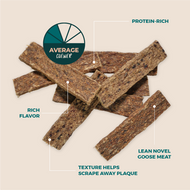
What goose strips are, in one paragraph: Goose strips are lean strips of dried goose muscle meat (Anser anser domesticus, family Anatidae) — single ingredient, no additives, no bone, cut into strips that produce a medium-length chewing session of roughly 10–20 minutes for most dogs. They occupy the middle ground in the goose lineup: longer and more satisfying than the quick-consumption training cubes, but shorter and boneless compared to the long-session goose necks. As lean skeletal muscle, they're naturally low in fat — appropriate for fat-restricted dogs — and as a novel avian protein, they're safe for beef-allergic dogs without bovine cross-reactivity. BSD's Goose Strips come in a 25-pack and suit dogs of all sizes, including small and special-needs dogs for which whole necks don't fit.
Where Goose Strips Fit — The Middle of the Lineup
Understanding goose strips means understanding the gap they fill between the other goose products. Each goose product serves a distinct function, and the strips occupy a specific and useful middle position:
| Product | Format | Session | Contains Bone? | Primary Role |
|---|---|---|---|---|
| Goose Necks | Whole neck | 25–45 min (long) | Yes | Long enrichment + joint support |
| Goose Strips | Lean muscle strips | 10–20 min (medium) | No | Medium enrichment, lean, boneless |
| Goose Cubes | Pre-portioned cubes | Seconds (training) | No | Standard training reward |
| Goose Hearts | Cardiac muscle | Seconds (training) | No | Jackpot training reward (taurine) |
The strips are the answer when a dog needs more than a quick training treat but isn't a candidate for — or doesn't need — the long, bone-containing neck. They're the everyday medium-session goose chew: enough chewing to deliver real enrichment value, lean enough for fat-restricted dogs, and boneless enough for the dogs that whole necks don't fit.
Why Boneless Matters — The Dogs That Can't Have Whole Necks
Goose necks are an excellent product, but their whole-neck structure includes bone, which makes them inappropriate for several categories of dogs. Goose strips give these dogs access to the novel goose protein and a satisfying chew without the bone consideration:
Small dogs: Whole goose necks are recommended for dogs 25 lbs and up due to their size and bone content relative to small-dog anatomy. Small dogs that would benefit from goose protein and a real chew session — rather than just a quick training treat — are well served by goose strips, which deliver the medium-session enrichment in a boneless form sized appropriately for smaller mouths. For the small food-allergic dog, goose strips are often the most practical goose enrichment chew.
Gulpers: Dogs that bolt food and gulp rather than chewing progressively are not ideal candidates for bone-containing chews, where progressive chewing is the safe consumption pattern. Lean muscle strips don't carry the same consideration — though all chews warrant supervision, a boneless muscle strip is a more forgiving format for a dog whose chewing style trends toward gulping. (For known gulpers, supervision and appropriate sizing remain important regardless of format.)
Dogs with prior GI or bone-related issues: Dogs with a history of GI sensitivity, prior obstruction, or any bone-related complication are better served by boneless formats. Goose strips provide the novel goose protein and chew enrichment without introducing bone for these dogs.
Owners who simply prefer boneless: Some owners are uncomfortable with bone-containing chews regardless of their dog's profile. Goose strips give them the goose protein and a real chew session in a format they're comfortable supervising.
The Lean Profile — For Fat-Restricted Dogs
Goose strips are lean skeletal muscle, naturally low in fat — which makes them specifically appropriate for the dogs where fat restriction is a clinical requirement alongside novel protein management:
Pancreatitis-history dogs: Fat restriction is the central dietary intervention in the management of pancreatitis. Dogs in stable, managed periods of pancreatitis can have treats within the fat limit their veterinarian specifies, and lean treats are essential. Lean goose strips are a candidate within many pancreatitis fat-restriction protocols — confirm the specific per-strip fat contribution fits the dog's prescribed daily fat limit with the managing veterinarian before use.
Hyperlipidemia (e.g., Miniature Schnauzers): Breeds and individuals with hyperlipidemia require ongoing fat management. The lean profile of goose strips makes them a fat-conscious enrichment option for these dogs, providing the novel protein and chew satisfaction without the higher fat load of richer chews.
Weight-management dogs: Overweight dogs — including the weight-prone, beef-allergic large breeds like Labs and Goldens — benefit from lean treats that provide enrichment without excess calories. Goose strips provide a medium-chew session with a lean nutritional profile, appropriate for dogs whose weight is being actively managed.
For any dog where the veterinarian has specified a low-fat treat protocol alongside novel protein management, goose strips and turkey tendon (BSD's other notably lean novel protein chew at 5% fat) are the two leanest enrichment options — both appropriate to discuss with the managing veterinarian for fat-restricted dogs.
BSD's Goose Strips — The Product
BSD's Goose Strips are lean strips of dried goose muscle meat — single ingredient, no additives, no bone — cut into strips that produce a medium-length chewing session for most dogs. They sit between the long-session goose necks and the quick goose training treats, serving as the everyday medium enrichment chew: enough chewing to deliver genuine enrichment value (cortisol suppression, satisfaction, occupation) without the length and bone of a whole neck. The lean muscle profile makes them naturally low in fat and appropriate for fat-restricted dogs.
The goose is sourced and produced in Poland from White Kołudzka geese raised on small family farms under EU food safety standards — a supply chain entirely separate from the North American commercial pet food system, which is what gives goose its genuine novel-protein status. The product is not made in the USA; that separation from the domestic supply chain is precisely what makes prior exposure essentially impossible for dogs raised on standard commercial diets.
The 25-pack provides a substantial supply for rotation use. As the medium-session entry in the goose lineup, goose strips fill the rotation slot between the long-session days (goose necks) and the training days (cubes and hearts) — and they're often the most practical everyday goose chew for small dogs, fat-restricted dogs, and dogs where whole necks aren't appropriate.
Goose Strips in the Rotation — Completing the Goose Lineup
The four goose products together cover every daily treat function from a single novel protein — and goose strips complete the set by filling the medium-session enrichment slot. A full goose-based protocol for a beef-allergic dog looks like:
| Function | Goose Product | When |
|---|---|---|
| Long enrichment + joint support | Goose Necks | 2–3x per week (25+ lb dogs) |
| Medium enrichment, lean, boneless | Goose Strips | Rotation days + small/fat-restricted dogs |
| Standard training reward | Goose Cubes | Daily training, high frequency |
| Jackpot training reward | Goose Hearts | High-value training moments |
For a beef-allergic dog without a chicken allergy, this single-protein lineup covers long enrichment, medium enrichment, standard training, and jackpot training — the complete daily treat architecture from one novel protein. Of course, the strongest protocol rotates goose with other novel proteins (camel skin, goat skin, pork) to maintain variety and preserve each protein's novelty over time — but within the goose family, the strips are the piece that makes the lineup complete by covering the medium-session slot that the necks (too long/bone) and cubes (too short) don't fill.
Breed and Situation Applications
Small breeds (under 25 lbs): The primary audience for goose strips. Small dogs that want goose protein and a genuine chew session — rather than just a training treat — are served by the strips where whole necks aren't appropriate for their size. The boneless, appropriately sized format gives small food-allergic dogs the medium enrichment chew the larger dogs get from necks.
Miniature Schnauzers: The hyperlipidemia-prone breed where fat restriction and food sensitivity often coincide. Goose strips' lean profile makes them a fat-conscious novel protein chew for Schnauzers — alongside turkey tendon (5% fat), one of the leaner enrichment options appropriate for the breed's fat-management needs. Confirm the specific fat contribution fits the dog's protocol with the managing veterinarian.
Pancreatitis-history dogs (any breed): In stable managed periods, the lean goose strip is a candidate within many veterinarian-specified fat-restriction protocols. The novel protein-plus-lean profile addresses both the allergy and the fat constraints. Always confirm with the veterinarian managing the pancreatitis before introducing.
Senior dogs: Older dogs that benefit from gentle medium-length enrichment without the jaw demand of a long hard chew, and from a lean profile as their metabolism slows, are well served by goose strips. The medium session suits the senior dog's pace, and the boneless format avoids bone-related considerations that may concern owners of aging dogs.
Weight-managed Labs and Goldens: The beef-allergic large breeds prone to weight gain benefit from the lean strip as a lower-calorie enrichment option on days when the caloric budget is tight, rotating with the richer necks on other days.
How to Use Goose Strips — Practical Protocol
Introduction: Standard novel protein introduction — supervised first session, monitor 24–48 hours for any adverse response, confirm tolerance before regular use. For beef-allergic dogs without prior exposure to goose, adverse reactions are not expected.
Sizing and supervision: Supervise all chew sessions. Size the strip appropriately for the dog — smaller portions for small dogs. While boneless and more forgiving than bone-containing formats, all chews warrant supervision, particularly for known gulpers, where appropriate sizing and active monitoring remain important.
Rotation: Use goose strips for the medium-session enrichment slot, rotating with goose necks (long sessions, for dogs that can have them), and alongside other novel proteins (camel, goat, pork) across the week to maintain variety and preserve novelty.
Caloric management: Though lean, strips still contribute calories — track them in the daily budget and reduce meal portions accordingly, especially for weight-managed dogs.
Frequently Asked Questions
Goose strips are appropriate for beef-allergic dogs without confirmed chicken allergy. Goose is Anatidae — an avian protein with no shared antigens or established cross-reactivity with bovine beef proteins, so a beef-allergic dog can eat goose strips with no risk of beef-allergen cross-reaction. The standard goose caveat applies: goose contains MLC-1, the conserved avian muscle protein that creates cross-reactivity risk across poultry species, so for a dog with confirmed chicken allergy, goose carries cross-reactivity risk and should not be introduced without veterinary confirmation of individual poultry tolerance. For a beef-only allergy with intact chicken tolerance, goose strips are safe — introduce them using the standard protocol of a supervised first session and a 24–48 hour monitoring window to confirm individual tolerance.
They serve different roles. Goose necks are whole dried necks — bone, cartilage, and muscle together — producing a long session of 25–45 minutes and delivering natural glucosamine and chondroitin from the joint cartilage for joint support. They're recommended for dogs 25 lbs and up because of the size and bone content. Goose strips are lean, boneless muscle meat in a strip format, producing a medium-length session of 10–20 minutes, with a lean, low-fat profile and no bone. The strips don't provide the joint-support glucosamine and chondroitin that the necks do (those come from the cartilage in the neck structure), but they're more appropriate for small dogs, fat-restricted dogs, gulpers, and dogs where bone content is a concern. Choose necks if your dog is 25+ lbs and you want long enrichment plus joint support; choose strips if your dog is small, needs a lean chew, can't have bone, or you want a shorter medium-session chew. Many owners use both — necks on long-session days for larger dogs, strips for medium sessions and for the dogs that necks don't fit.
Yes — goose strips are often the best goose enrichment chew for small dogs. Whole goose necks are recommended for dogs 25 lbs and up because of their size and bone content, which leaves small dogs without a long-session goose option. Goose strips fill that gap: a boneless, lean, medium-session chew that small dogs can have, sized appropriately by portioning the strip to the dog. For a small beef-allergic dog that needs a real chew session — the cortisol suppression and occupation of actual chewing, not just a quick training treat — goose strips deliver that in a format suited to small-dog anatomy. Supervise the session, size the portion to the dog, and monitor consumption as you would with any chew. For very small dogs, you can break a strip into a smaller portion appropriate for the dog's size and calorie budget.
Goose strips are lean skeletal muscle and naturally low in fat, which makes them a candidate within many pancreatitis fat-restriction protocols — but you must confirm with the veterinarian managing your dog's pancreatitis before introducing them. Pancreatitis management centers on fat restriction, and the appropriateness of any treat depends on the specific daily fat limit your veterinarian has set and how the treat's fat contribution fits within it. In stable, well-managed pancreatitis periods (not during an acute flare), lean treats within the prescribed fat limit are generally acceptable, and goose strips' lean profile makes them one of the more appropriate enrichment chew options for fat-restricted dogs — alongside turkey tendon, which at 5% fat is BSD's leanest chew. During any active pancreatitis flare, do not introduce new treats and strictly follow your veterinarian's dietary guidance. Confirm the specific per-strip fat contribution and daily limit with the veterinarian managing the pancreatitis, and introduce only when the condition is stable and the vet has approved the treat within the overall management plan.
No — goose strips are lean muscle meat and do not contain the cartilage that provides the natural glucosamine and chondroitin joint support found in goose necks. The joint-support nutrients in goose necks come specifically from the joint cartilage between the cervical vertebrae in the whole-neck structure; goose strips are muscle meat without that cartilage component. If joint support is a goal for your dog, goose necks are the goose product that provides it (for dogs 25+ lbs that can have the whole-neck format), or you can discuss food-source versus supplement-based glucosamine and chondroitin with your veterinarian for dogs that can't have necks. Goose strips' value is in providing lean novel protein and medium-session chew enrichment — they're the right choice when the priorities are a lean profile, a boneless format, or suitability for small dogs, but joint support is not among their functions. For a dog that needs both the lean/boneless format and joint support, discuss supplement-based joint support with your veterinarian, alongside using goose strips for enrichment.